Reading Your Opponent
Learn how to track your opponent's strategy in Splendor Duel. Spot win condition signals, time your defensive plays, and use information asymmetry to your advantage.
16 min read
The Game of Almost Perfect Information
Splendor Duel is a game of near-perfect information. Your opponent's purchased cards, gem tokens, crown count, and prestige total are all visible at all times. The only hidden element is reserved cards, and even those can be tracked by a player who pays attention to what disappears from the market. This means that everything you need to outplay your opponent is sitting right in front of you. The question is whether you are actually looking at it.
Most players spend the majority of their mental energy on their own plans: which gems to collect, which card to buy next, how to reach their win condition. This inward focus is natural, but it leaves half the game on the table. In a two-player contest where every turn counts, the information on your opponent's side of the table is just as valuable as the information on yours. Reading your opponent (understanding their plan, anticipating their next move, and knowing when to disrupt) is the skill that separates good players from great ones. If you are still learning the fundamentals, start with our beginner's guide before diving into this more advanced material.
The Opponent Dashboard: What to Track Every Turn
Strong Splendor Duel players maintain a mental dashboard of their opponent's position. Before you even think about your own move each turn, scan your opponent's tableau and answer these questions:
The Three Vital Numbers
- Total prestige points: How close are they to 20? Once they cross 15, every high-point card in the market becomes a potential game-ender.
- Crown count: How close are they to 10? The critical alarm threshold is 7 crowns. Once they hit 7, any two-crown card could end the game instantly.
- Points by color: Is any single color approaching 10 prestige points? This is the one most players forget to check, and it is the win condition that produces the most surprise losses.
These three numbers take about five seconds to assess, and they should be updated every single turn. The cost of not tracking them is losing to a win condition you did not see coming.
The Supporting Information
Beyond the three vital numbers, pay attention to:
- Their gem tokens: What colors are they accumulating? A pile of blue and green tokens tells you exactly which cards they are eyeing.
- Their permanent bonuses: Which colors have they built up? Two or three bonuses in a single color means they can now buy expensive cards in that color for almost nothing. Cross-reference their bonuses with the visible Level 2 and Level 3 cards to identify their likely targets.
- Their reserved cards: How many do they have? If they reserved a face-up card, do you remember which one? A player with two or three reserved cards has a plan you cannot fully see, but you can infer a lot from their gem collection pattern.
- Their Privilege Scrolls: A scroll can let them take a needed gem and buy a card on the same turn, effectively giving them two actions. If your opponent holds a Privilege and has gems close to a purchase, they may be able to finish faster than you expect.
Tip: Build the habit of reading your opponent's board at the start of your turn, before you even look at your own options. This prevents tunnel vision and ensures you never miss a threat.
Spotting Win Condition Signals
Each of the three victory paths produces distinctive patterns that you can learn to recognize. The earlier you identify which path your opponent is on, the more turns you have to respond.
Signals of a Prestige Race (20 Points)
The prestige race is the default win condition, and roughly 70% of games end this way. It is the hardest to "read" because almost every card purchase contributes to prestige naturally. Look for:
- Balanced gem collection: They are taking multiple colors rather than concentrating on one, building a broad engine that supports expensive purchases across the board.
- Early Level 1 purchases across several colors: A spread of bonuses indicates they are building an engine to power through Level 2 and Level 3 cards.
- Targeting high-point Level 3 cards: If they are collecting gems that match the cost of a visible 4- or 5-point Level 3 card, that card is almost certainly their target.
- Royal card claims without crown focus: They are picking up crowns incidentally (not chasing them) and using the Royal cards purely for their prestige bonus.
The prestige race is the most robust strategy and the hardest to block because there are many paths to 20 points. Your best defense is usually to race faster rather than trying to block every possible purchase.
Signals of a Crown Rush (10 Crowns)
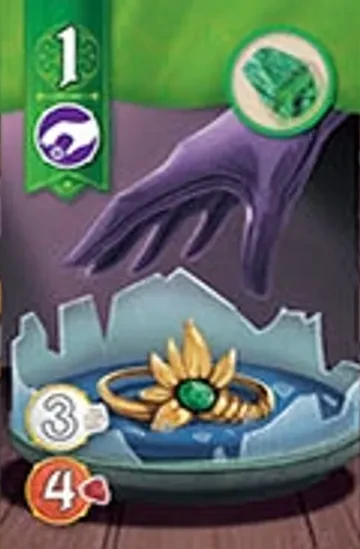
Crown victories are the sneakiest win condition in the game. Crowns do not have a scoreboard that screams for attention; they are small symbols scattered across your opponent's tableau. Look for:
- Purchases that seem inefficient for points: A player buying a 0-point Level 1 card with a crown, or a 1-point Level 2 card with a crown, when better point-value options were available. This is the strongest signal. If they are choosing crowns over points, they are on the crown path.
- Early Royal card claim at 3 crowns: Hitting the first Royal threshold quickly means crowns are a priority, not a side effect.
- Cards purchased across multiple colors with no engine coherence: A crown-focused player does not care about bonus color alignment. Their purchases will look scattered from an engine perspective because they are selecting for crowns, not bonuses.
- A count of 6-7 crowns: This is the danger zone. At 7 crowns, a single two-crown card ends the game. At 8, any one-crown card finishes it. If you see 7+, crown denial is your top priority immediately.
Tip: Count your opponent's crowns explicitly every turn from the mid game onward. Do not estimate; count. The crown victory only catches you off guard if you are not watching for it.
Signals of a Color Victory (10 Points in One Color)
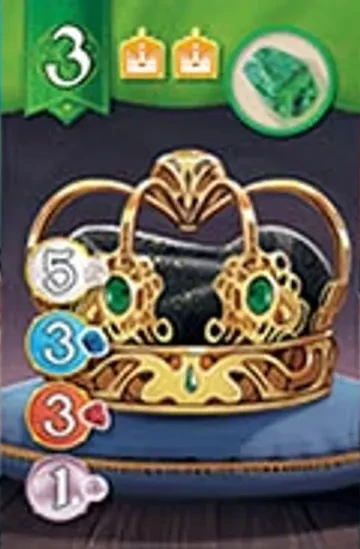
The color victory is often the most overlooked, partly because tracking prestige by color requires more mental effort than tracking a single total. Look for:
- Repeated purchases in one bonus color: If your opponent has bought three or four cards that all provide green bonuses, and some of those carry prestige points, they may be concentrating green.
- Targeting Associate cards: Associates count as the color of the card they are grouped with, making them powerful concentration tools. An opponent buying Associates alongside a color stack is building toward the color win.
- Heavy gem collection in one color: Consistent demand for the same gem color, especially alongside an existing bonus concentration, is a strong signal.
- A single color reaching 6-7 points: This is the danger threshold. A single Level 3 card worth 3-4 points could push them to 10 in one purchase. Once any color hits 6, start scanning the market for cards they could use to finish.
The color victory is most dangerous when it emerges organically in the mid game. Your opponent may not have started with the intention of winning by color; they may realize partway through that they have 6 green points and pivot. This is why tracking points by color every turn matters.
The Information Asymmetry: Reserved Cards
Reserved cards are the only hidden information in Splendor Duel. When your opponent reserves a face-up card, the card disappears from the market and goes face-down in front of them. When they reserve from the top of a deck, you have no idea what they took. This creates the game's only element of genuine uncertainty.
Tracking Reservations
When your opponent reserves a face-up card, remember what it was. This sounds simple, but under the pressure of managing your own strategy, it is easy to forget. If you can track what your opponent reserved, you effectively eliminate all hidden information from the game. You know their plan, their likely purchase timeline, and exactly which card to worry about.
When they reserve from a deck (a blind reserve), you have less information, but you can still infer a lot. Watch what gems they collect after the reservation. If they suddenly start stockpiling a color they were not collecting before, the reserved card almost certainly requires that color. Their behavior after the reservation reveals their intentions.
What Multiple Reservations Tell You
- One reservation is normal and tells you they have a specific target. Identify it and decide if you need to respond.
- Two reservations means they are investing heavily in future purchases at the cost of present development. Their engine is falling behind, but they may have powerful plays lined up.
- Three reservations means they are locked: they cannot reserve again until they purchase from their hand. This makes them predictable. Their next several turns must involve buying reserved cards or collecting gems, and they cannot defensively reserve anything you play for.
Tip: If your opponent has three reserved cards and is struggling to buy them, they have over-committed. This is your window to accelerate, as their tempo loss compounds every turn they cannot purchase.
When to Shift from Building to Blocking
Every turn you spend blocking is a turn you are not advancing your own position. This makes blocking a cost, and like any cost, it needs to be justified by the return. The art is knowing exactly when the switch from offense to defense is correct.
The Engine Phase (Early Game)
In the first five or so turns, almost never block. Both players are building their engines, and the opportunity cost of blocking is enormous. A Level 1 card you buy now provides permanent value for the rest of the game. A Level 1 card you deny your opponent is worth only the one card you took. Unless your opponent is making an unusually aggressive play (like reserving a Level 3 card on turn two), focus entirely on your own engine.
During the engine phase, your "opponent reading" is passive: note what colors they favor, which bonuses they are building, and what their early purchases suggest about their long-term plan. File this information away for later.
The Transition Phase (Mid Game)

By the mid game you should have a clear read on your opponent's probable win condition. This is when blocking becomes a consideration, but only alongside your own advancement. The ideal mid-game move advances your strategy while also denying something your opponent needs. A card that gives you 2 prestige points and happens to carry the bonus color your opponent is stacking? That is a dual-purpose play: offense and defense in one action.
Pure blocking in the mid game (buying or reserving a card solely to deny it) should be reserved for high-stakes situations: a card that would give your opponent a third bonus in a key color, a two-crown card when they are at 5 crowns, or a card that would push their single-color prestige into the danger zone.
The Crisis Phase (Late Game)
Once either player approaches a win condition (15+ total prestige, 7+ crowns, or 7+ points in a single color), blocking becomes a first-class concern. At this stage, you must evaluate every visible card in the market not just for its value to you, but for its danger in your opponent's hands. If a single card could win them the game, that card must be dealt with: bought, reserved, or made unaffordable through gem denial.
The late-game question on every turn is: Can my opponent win on their next turn? If the answer is yes, you must block. If the answer is no, you can continue racing. If the answer is "maybe, depending on what they reserved," you need to make a judgment call based on the information you have tracked.
Tip: In the late game, count the exact number of turns you need to win. Count the exact number your opponent needs. If they can win in fewer turns than you, blocking is mandatory. If you are ahead on tempo, keep racing.
Gem Denial: Offense Through Defense
The gem economy is a shared resource, and every gem you take is a gem your opponent cannot take. This makes gem collection a natural form of defense that often costs you nothing extra.
Passive Denial
When two gem collection options are roughly equal for your own purposes, choose the one that hurts your opponent more. This is free defense; it does not cost you a turn of tempo because you were going to collect gems anyway. Passive denial should be your tiebreaker on every gem collection turn.
For example: you need red and blue gems, and the board offers a line with red-blue-white and another line with red-blue-green. If your opponent has been collecting green, take the red-blue-green line. You get the same two gems you needed, and your opponent loses access to a green token they wanted.
Active Denial
Active denial means taking gems you do not need, purely to deny them to your opponent. This is expensive (you are spending a turn on gems that do not advance your plan) and should be reserved for critical moments. The classic scenario: your opponent needs one more blue gem to buy a card that wins them the game. Taking that blue gem, even if you have no use for it, is the only correct play.
Active denial is also justified when your opponent is one gem away from a devastating Level 3 purchase that would generate a major swing in prestige or crowns. The calculation is simple: is the card they would buy worth more than the turn I am spending to prevent it? In the late game, the answer is almost always yes.
Board Shape Denial
An advanced form of denial involves thinking about what the board looks like after your collection. When you take gems in a line, the remaining tokens form new adjacencies. Sometimes you can take a line that leaves your opponent with no good three-gem options on their next turn, forcing them into a less efficient two-gem or single-gem collection. This kind of positional denial is difficult to execute consistently, but even occasional awareness of it provides an edge.
Baiting and Misdirection
Opponent reading is not a one-way street. Just as you are reading your opponent, they are reading you, and strong players can exploit this by sending misleading signals.
The False Target
Deliberately collect gems that point toward a card you do not actually intend to buy. If your opponent reads your gem collection as a signal of your plan, they may waste a reservation or a blocking purchase on a card you were never going to buy. Meanwhile, your real target (perhaps a card you reserved earlier, or a card in a different color) goes uncontested.
This tactic works best against opponents who are actively reading you. Against a player who never looks at your side of the table, misdirection is wasted effort.
Forcing Defensive Reactions
If your opponent is a defensive player who frequently blocks, you can exploit this by showing interest in multiple cards across different turns. Each time they react defensively (reserving a card, taking denial gems) they spend a turn not building. If you are advancing your own plan while they chase ghosts, the tempo advantage accumulates quickly.
When Not to Bluff
Misdirection has a real cost: you are spending turns on gems or actions that do not directly advance your plan. In a 15-20 turn game, even one wasted turn is significant. Bluffing is a late-game luxury for situations where you are ahead on tempo and can afford the investment. In the early and mid game, straightforward engine building almost always outperforms trickery.
The Turn-Start Checklist
To make opponent reading a habit rather than an occasional effort, run through this checklist at the start of every turn. It takes about ten seconds and will prevent the vast majority of surprise losses.
- Total prestige: How many points does my opponent have? Are they approaching 20?
- Crown count: How many crowns? Are they at 7 or above?
- Color concentration: Is any single color approaching 10 prestige points?
- Gem holdings: What colors are they accumulating? What does that tell me about their next purchase?
- Reserved cards: How many, and do I know what they are?
- Can they win next turn? Given their gems, bonuses, and the market, is there any card they could buy right now that triggers a victory?
If the answer to question 6 is yes, everything else is secondary. Block that path. If the answer is no, proceed with your plan, but keep the other information in mind as you choose between options.
Putting It All Together
Reading your opponent is not a single dramatic insight. It is a continuous process of observation, inference, and adjustment that happens every turn throughout the game. The players who do it well are not geniuses with photographic memories. They are simply disciplined about checking the same information every turn and asking the same questions. Over time, the pattern recognition becomes automatic, and you start seeing threats and opportunities that used to blindside you.
The payoff is enormous. A player who tracks their opponent's position can block wins that would otherwise be invisible, time their own finishing moves to exploit defensive gaps, and maintain pressure across multiple win conditions that forces their opponent into impossible choices. In a game as tight as Splendor Duel, where a single turn can decide the outcome, that awareness is the most powerful weapon you can develop.
For more on building the engine that powers your strategy, see our gem economy guide. To sharpen your card evaluation skills, read the card selection strategy guide. And to eliminate the habitual errors that bleed away your turns, check out common mistakes to avoid. You can also browse every card in the game or use the card comparison tool to evaluate specific cards side-by-side.