Splendor Duel Opening Moves
How the best Splendor Duel players spend their opening turns. Learn the optimal first move, when to reserve versus collect, and which cards to prioritize as your first purchase.
14 min read
The opening of a Splendor Duel game sets the trajectory for everything that follows. The decisions you make in your first five turns determine whether you enter the mid game with a functioning engine or spend the rest of the match scrambling to catch up. Yet most players treat the opening on autopilot: grab some gems, buy whatever is cheap, hope for the best. Strong players approach the opening with deliberate intent, and the patterns they follow are remarkably consistent. If you are new to the game, read our beginner's guide first to make sure you understand the core rules and actions.
Your First Move: Take or Reserve?
The conventional wisdom is that you should always take three tokens on your first turn. It is the highest-volume action, it starts filling your hand, and it seems like the obvious default. But in competitive play, roughly one in four winning players reserve a card on their very first turn instead, and this holds true regardless of whether they are going first or second.
Why would you give up three tokens in exchange for a single gold and a card in hand? Because reservation on turn one is not a resource play; it is an information and denial play. A first-turn reservation grabs a gold token (a flexible wild resource), locks a key card away from your opponent before they can react, and immediately signals a strategic direction. The gold token you gain replaces roughly a third of the throughput you sacrificed, while the reserved card gives you a guaranteed target to build toward.

The most popular first-turn reservation target is the family of Level 1 cards that cost three gems of one color and carry a crown. These cards are cheap, provide a bonus and a crown, and the gold token from reservation effectively makes them cost just two colored gems. Reserving one of these cards is a strong opening because it begins your crown count, feeds your engine, and the gold covers one of the three gems needed to purchase it later.
Tip: If you choose to collect tokens on turn one but see your opponent reserve a crown card, pay attention to which color they locked in. Their next few turns will likely involve collecting that color, and you can disrupt them by taking those tokens first.
Pearls Shape the Opening
Pearls are the most contested resource in the opening, and for good reason. Unlike colored gems, pearls cannot be discounted by permanent bonuses: no matter how large your engine grows, every card that requires a pearl will always demand an actual pearl token from your hand. With only two pearls in the entire bag, they are fiercely contested throughout the game, and the race to secure them begins on turn one. Nearly a third of all tokens collected on the first turn are pearls, a proportion far higher than any single gem color. By turn two, pearl collection drops to almost nothing because both players have already grabbed what they can.
This pearl scarcity is what makes the TakeAnotherTurn cards, which all require a pearl, both powerful and expensive. Securing a pearl early is not a strategic choice so much as a necessity: if you fall behind on pearls, you lose access to some of the strongest cards in the game. The opening is structured around pearl access more than any other single factor.
Going Second: Privilege into Reservation
If you are the second player, you begin the game with a privilege: the ability to take a single token of your choice from the board before your normal action. About four in ten winning second players use this privilege before their very first turn, and there is a near-universal consensus on what they take: a pearl.
But the reason they use privilege for the pearl is not simply to get an extra token; it is to free up their actual action for a reservation. If you take three tokens on turn one, you can usually include a pearl in that line. The privilege becomes redundant for pearl access. Where the privilege shines is when you want both a pearl and a gold token on the same turn: use the privilege to grab the pearl, then reserve a card as your action, collecting a gold from the board. You walk away from turn one with a pearl, a gold, and a reserved card locked away from your opponent.
This privilege-into-reservation opening is effectively a compressed version of what the first player needs two turns to accomplish. It secures the scarce pearl, gains wild gold flexibility, and locks in a key card, all before the opponent has taken their second turn. It is one of the main ways the second player compensates for moving after their opponent.
Tip: If you are going second and see a crown card or TakeAnotherTurn card you want, consider using your privilege for a pearl and then reserving that card on turn one. You get the pearl, the gold, and the card, a stronger start than simply taking three tokens.
What to Buy First
Your first card purchase is one of the most consequential decisions in the opening, and strong players are remarkably consistent about what they choose. The distribution of first purchases falls into a clear hierarchy.
The TakeAnotherTurn Cards (Most Popular)
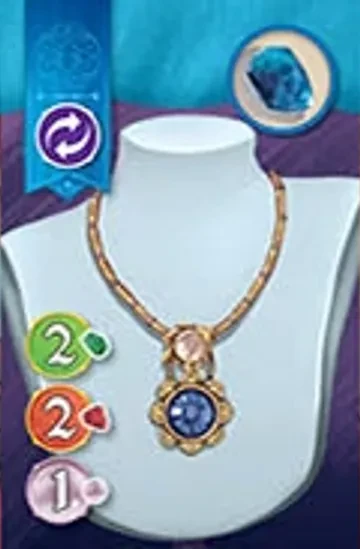
Close to half of all first purchases among strong players are the Level 1 cards that cost two gems of one color, two of another, plus a pearl, and carry the TakeAnotherTurn ability. These five cards (one for each bonus color) are far and away the most popular opening buy, and the reason is straightforward: the extra turn they grant is disproportionately powerful in the early game.
When you buy a TakeAnotherTurn card on turn three or four, you immediately get a bonus action. That extra turn is essentially free; it does not cost your opponent a turn, and it lets you either collect more tokens or make a second purchase. In a game that typically lasts 15-25 turns, gaining one free turn in the opening is an enormous tempo advantage. The card also provides a permanent gem bonus, so it feeds your engine going forward. The pearl cost is manageable if you secured one on turn one, and the two-plus-two gem split means you only need two collection turns to afford it.
The Four-Color Cards (Second Most Popular)
About one in five first purchases are the Level 1 cards that cost one gem each in four different colors, with no special ability. These cards are the easiest to buy because the distributed cost means you can assemble the required gems from almost any two token-collection turns. They provide a bonus but no extra turn and no crown, making them a solid if unspectacular first buy. Players tend to choose these when the board state does not favor a quick TakeAnotherTurn purchase: perhaps the pearl is unavailable or the required color pairs are not lining up.
The TakeGemOfSameColor Cards (Third Most Popular)
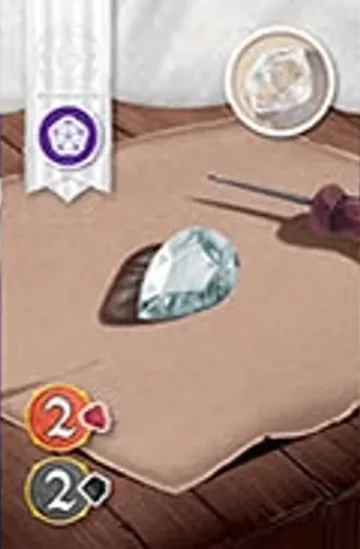
Around one in six first purchases are the Level 1 cards that cost two gems of one color plus two of another, with the TakeGemOfSameColor ability. These cards are slightly harder to buy than the four-color cards because they require pairs of specific colors, but the ability is useful: it lets you take an additional gem matching one you already collected, which accelerates your next purchase. They sit in a middle ground between the explosive power of TakeAnotherTurn and the easy accessibility of the four-color cards.
The Three-of-One-Color Crown Cards (Least Common as First Buy)
Despite being the most popular reservation target, the Level 1 crown cards are actually among the least common first purchases. Only about one in eight first buys is a crown card. This asymmetry reveals something important about how strong players use these cards: they prefer to reserve them (gaining a gold and locking them in) rather than buying them outright as their first purchase. The crown card becomes a second or third buy, purchased from the hand using the gold token plus two colored gems, by which point the player has already established tempo with a TakeAnotherTurn or engine card.
When to Make Your First Purchase
Timing your first buy is as important as choosing what to buy. Among winning players, first purchases split roughly into three windows:
- Turn three: About one in five winners buy their first card here, typically a TakeAnotherTurn card after two token-collection turns. This is the fastest possible tempo for a card that costs five total gems (two plus two plus one pearl), and it requires efficient token lines.
- Turn four: Another one in five buy on turn four. This is the most common window for the first player, who may need an extra collection turn to assemble the right colors.
- Turn five: Nearly a third of winners make their first purchase here. A turn-five buy is not slow; it often reflects a strategy that prioritized reserving one or two cards first, then purchasing once the gold tokens and accumulated gems make an efficient buy possible.
- After turn five: Roughly three in ten winners do not buy a single card in their first five turns. These players are stacking reservations and tokens for a burst of activity in turns six through eight, often buying two or three cards in quick succession once their reserves are ready.
The second player tends to purchase slightly earlier than the first player, likely because the privilege token gives them an extra resource to work with. If you are going second and can buy a TakeAnotherTurn card on turn three, that is often the strongest possible opening sequence.
Tip: Do not panic if you have not purchased anything by turn five. Many winning games feature a slow, deliberate opening followed by an explosive mid game. The key is that every turn without a purchase should be building toward a clear plan, collecting specific gems or reserving specific cards, not just aimless accumulation.
The Reservation-Heavy Opening
About a third of winning games feature two or more reservations in the first five turns, and some players reserve three cards before buying anything at all. This reservation-heavy style is a legitimate alternative to the "collect and buy quickly" approach, and understanding when to use it is a hallmark of strong play.
The reservation-heavy opening works because each reservation gives you a gold token (up to three across the game), and three gold tokens represent enormous purchasing flexibility. A player with three gold and a handful of colored gems can buy almost any Level 1 or Level 2 card in the game. The downside is that you are spending turns not collecting gems and not buying cards, so your permanent bonuses start later. This makes the style risky against an opponent who is racing to build an engine, but powerful against an opponent who is playing reactively.
The most commonly reserved cards tell us what this strategy targets: crown cards at Level 1 (over half of all reservations) and the 2+2+2+pearl Level 2 cards that offer two prestige points and a crown (about 15% of reservations). Players reserving multiple crown cards in the opening are clearly setting up a crown-based mid game, where the early crowns combine with mid-game crown purchases to threaten the 10-crown victory condition or trigger Royal cards.
Opening Action Patterns
There is no single correct sequence of actions for the first five turns. The variety of winning sequences is enormous; the most common pattern accounts for less than one in ten games. However, several broad principles emerge from the patterns.
Most winning openings start with two token-collection turns. Whether going first or second, the majority of players spend turns one and two taking gems from the board, then begin mixing in reservations and purchases from turn three onward. This makes sense: you need a critical mass of tokens before you can do anything else productive.
Reservations cluster in the middle turns. Turns three and four are the peak reservation window, where players have enough board information to identify their targets. Early reservations (turn one) happen about a quarter of the time, usually when a high-value card is visible that would be too dangerous to leave for the opponent.
First purchases rarely happen before turn three. This is a mechanical reality: most Level 1 cards cost four to five gems total, and you can collect at most three per turn. Two collection turns gives you five to six gems (assuming some are the right colors), which is just enough for a Level 1 purchase. Players who buy on turn three have been highly targeted in their token selection.
Putting It Together: Sample Opening Sequences
Here are three common opening archetypes that capture how these principles play out in practice.
The Fast Engine: Take 3 tokens (including pearl) → Take 3 tokens → Buy a TakeAnotherTurn card → Use the extra turn to take more tokens → Reserve or buy. This is the most aggressive tempo opening, getting a permanent bonus and a free turn by turn three. It works best when the board offers good token lines in the colors you need.
The Reserve-First: Take 3 tokens (including pearl) → Reserve a crown card → Take 3 tokens → Reserve a second card → Buy using gold + gems. This approach sacrifices early purchases for flexibility and denial. You end up with two gold tokens and two reserved cards, giving you a guaranteed path to two specific cards while denying both to your opponent.
The Slow Build: Take 3 tokens → Take 3 tokens → Take 3 tokens → Reserve a Level 2 card → Buy a Level 1 card. Some players prefer to load up on tokens for three straight turns, hitting or approaching the 10-token hand limit, then start purchasing efficiently. This approach generates the widest selection of buyable cards but sacrifices tempo and gives the opponent uncontested board access for multiple turns.
Tip: Do not commit to one opening archetype for every game. The best opening depends on what the card market offers, what the board looks like, and whether you are going first or second. Flexibility is always more important than following a script.
Key Takeaways
- Reserving on turn one is a legitimate strategy used by roughly a quarter of winning players. Don't default to collecting tokens without evaluating the reservation option first.
- Pearls drive the entire opening because they cannot be discounted by bonuses. Every player is racing to secure them, and falling behind on pearls locks you out of the strongest early cards.
- Going second is not a disadvantage if you use your privilege wisely. Privilege into reservation gives you pearl, gold, and a locked card on turn one, more than the first player can achieve in a single turn.
- The TakeAnotherTurn cards are the strongest first purchase by a wide margin. Plan your first two to three turns around being able to afford one.
- Crown cards are reserved far more often than they are bought first. The gold token from reservation subsidizes their cost while securing a crown and denying it to your opponent.
- There is no single optimal opening sequence. Winning players use a wide variety of patterns, but nearly all of them have a clear plan within the first two turns. The worst opening is an aimless one.
For deeper dives on the concepts mentioned here, see our guides on the gem economy, card selection strategy, and reading your opponent. You can also browse every card in the game to familiarize yourself with the cost structures discussed in this guide.